Scandinavian Fjords
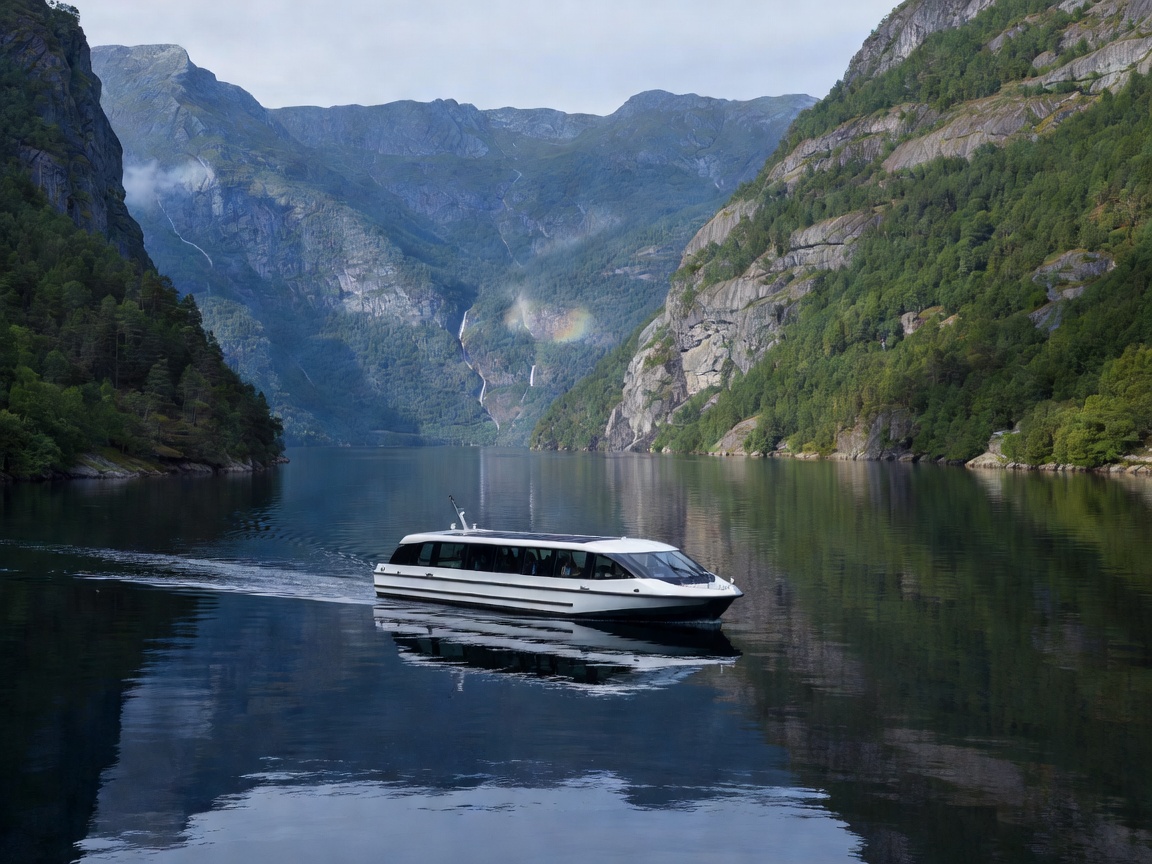
The Coastal Lifeline of Northern Europe
Scandinavia’s geography, defined by rugged coastlines, thousands of islands, and deep-water fjords, makes terrestrial transport inefficient and often impossible. For nations like Norway, Sweden, and Denmark, the ferry network is not merely an alternative form of transport; it is an integrated part of the national highway system.
The operational environment in Northern Europe presents unique challenges. Extreme winter weather, icing conditions, and the need to navigate narrow, environmentally sensitive waterways have driven Scandinavian operators to become global pioneers in maritime technology and vessel design.
The Coastal Express and Regional Networks
The Norwegian coastal route represents one of the most famous maritime passages in the world. Operating year-round, these services provide critical freight and passenger links to remote communities far above the Arctic Circle. Unlike standard point-to-point ferries, these vessels make dozens of port calls on a continuous loop.
Beyond the long-haul coastal express routes, local fjord crossings act as floating bridges. In western Norway, a road journey between two cities may involve several mandatory ferry crossings. The scheduling, reliability, and frequency of these local services are meticulously managed by regional road authorities.
Pioneering Green Maritime Technology
Scandinavia is at the absolute forefront of decarbonizing maritime transport. Driven by strict government mandates demanding zero-emission solutions for public tenders, the region has rapidly adopted battery-electric propulsion.
The Shift to Electric Ferries
Short fjord crossings are perfectly suited to electrification. Ferries complete brief transits of 15 to 40 minutes, followed by a rapid-charging cycle while docked for loading and unloading. This constant "micro-charging" allows vessels to operate continuously without requiring massive, heavy battery banks that would compromise cargo capacity.
For longer coastal routes where full battery operation is not yet feasible due to range limitations, operators are investing in hybrid systems and exploring hydrogen fuel cell technology. The Norwegian government has explicitly stated goals to make its world heritage fjords zero-emission zones, pushing operators to phase out conventional diesel engines rapidly.
Vessel Design and Ice-Class Operations
Vessels operating in the Baltic Sea between Sweden, Finland, and Estonia face a different set of challenges, primarily sea ice. During winter months, large portions of the Baltic freeze. Ferries operating these routes are built to rigorous ice-class specifications, featuring reinforced hulls and specialized propulsion systems capable of breaking through seasonal ice without requiring icebreaker escort.
These Baltic ferries are also among the largest passenger ferries in the world. Operating essentially as cruise-ferries, they generate significant revenue from onboard amenities, duty-free shopping, and entertainment, subsidizing the cost of freight transport.
Operational Advantages and Challenges
| Factor | Details |
|---|---|
| Integration | Ferry schedules are heavily integrated with local bus and train services to provide seamless public transit. |
| Environmental Leadership | Highest concentration of electric and hybrid commercial vessels globally, serving as a blueprint for other nations. |
| Weather Constraints | Operations can be disrupted by severe winter storms, though vessels are engineered for high sea states. |
| Infrastructure Costs | Upgrading rural ferry quays with high-voltage rapid charging infrastructure requires massive public investment. |